
My Bachelor Thesis
The LED Video Wall Technology and how it is used in Film & TV
My bachelor thesis examines the use of the Unreal Engine in film and television production, with a particular focus on how emerging real-time technologies and the influence production workflows role of game and level designers. Traditionally, the film industry has relied heavily on greenscreen technology to create virtual environments. While effective, this method often requires extensive post-production work and places a high imaginative burden on actors and crew members during filming. Recent technological developments, however, point toward a shift in how virtual worlds are created and integrated on set.
A central focus of the thesis is the LED Video Wall Technology, which combines large-scale LED screens with real-time rendered environments created in the Unreal Engine. This approach allows digital backgrounds to be displayed directly on set, synchronized with camera movement through motion tracking. As a result, actors can perform within a visible environment, and cinematographers, directors, and designers can evaluate lighting, reflections, and composition in real time. My thesis argues that this method represents a significant advancement over traditional greenscreen workflows, as it reduces post-production effort, improves realism, and allows for faster creative decision-making on set.
The work analyzes three major case studies to demonstrate different applications of the Unreal Engine in film and television. The first case study, The Mandalorian, showcases the most advanced use of LED wall technology. Over half of the series was filmed using a curved LED stage, enabling realistic lighting and reflections while significantly reducing the need for location shoots. The production illustrates how real-time rendering blurs the boundaries between game development and filmmaking, opening new opportunities for level designers to contribute directly to film production.
The second case study, Game of Thrones, explores the use of the Unreal Engine primarily during pre-production. Through virtual reality and real-time visualization, complex battle scenes, environments, and camera movements were planned and tested before filming. This approach improved communication between departments and allowed creative and technical decisions to be made early, reducing uncertainty during production.
The third case study, John Wick: Chapter 3, highlights the use of virtual reality and Unreal Engine environments during the concept and design phase. In this case, VR was essential for planning complex sets involving mirrors and reflections, demonstrating the engine’s value as a bridge between concept art and physical set construction.
In addition to case studies, my thesis discusses technological developments such as NVIDIA’s RTX graphics cards and Unreal Engine 5, including features like real-time ray tracing, Lumen, and Nanite. These advancements further enhance realism and performance, reinforcing the suitability of game engines for cinematic applications.
My thesis concludes that the Unreal Engine significantly changes production workflows in film and television, particularly for level designers. Rather than replacing existing roles, the technology fosters interdisciplinary collaboration between the gaming and film industries. While challenges such as high technical complexity and limitations in crowd simulation remain, the Unreal Engine represents a future-oriented tool with substantial potential to redefine virtual production.
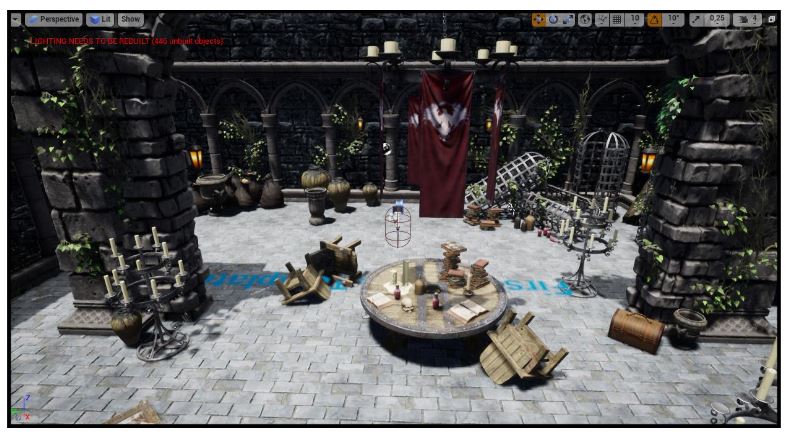
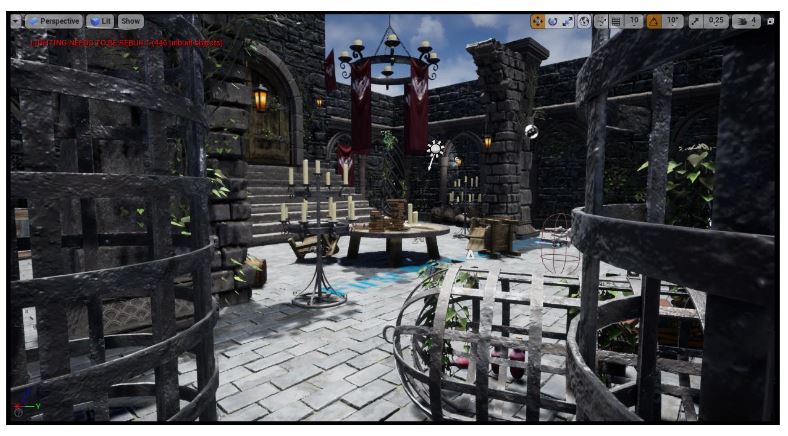
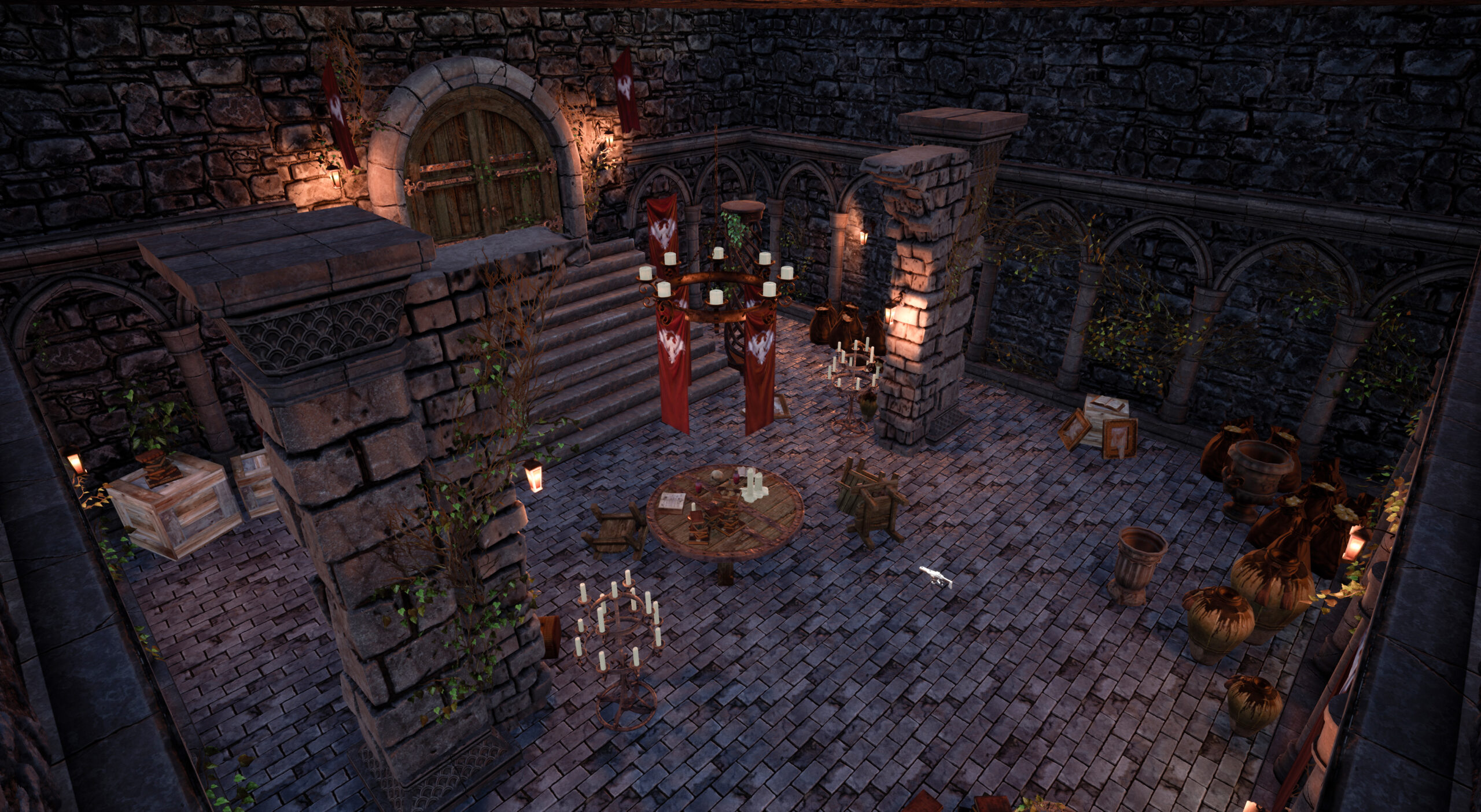
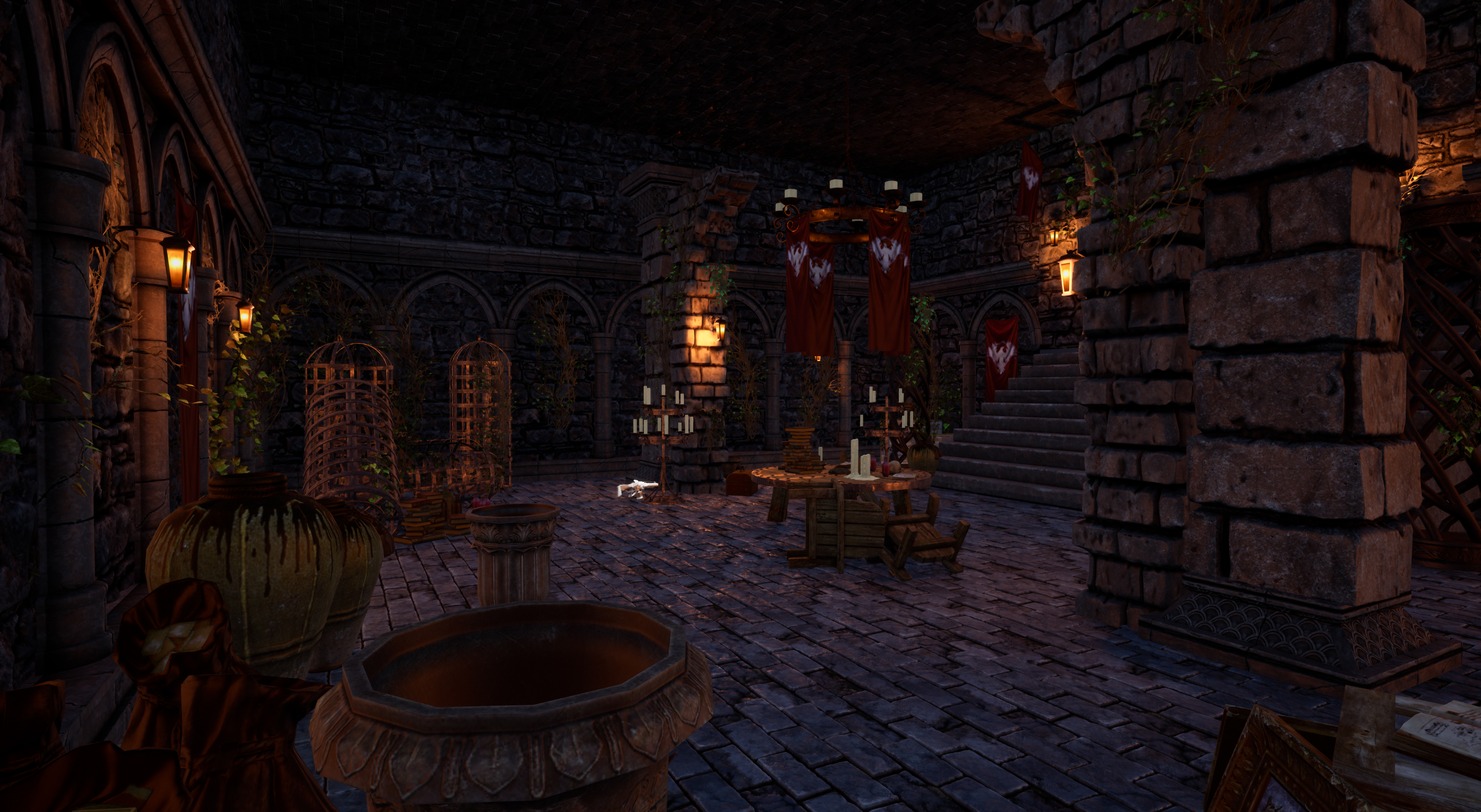
The practical part of the thesis focuses on recreating a simplified virtual production workflow using the Unreal Engine. A level section was designed and implemented (Asset Packs ‚Infinity Blade Castle‘ and ‚Medieval Dungeon‘ were used) to simulate a digital environment comparable to those used in modern film productions. In addition, a recording was carried out and later combined with the virtual background to analyze differences between traditional compositing and real-time rendering approaches. The practical work was then compared to the workflow used in The Mandalorian, highlighting similarities and differences in structure, flexibility, and efficiency. This hands-on approach helped to better understand the technical requirements and creative potential of Unreal Engine–based virtual production.